



 However, in 1991 Ukrainian “patriots” didn’t consider it shameful to stand at the side of those very “Katsaps” surrounded by Russian flags; especially as they were greeted with smiles and words of gratitude to ‘brothers-in-arms’. At that time, finding themselves in minority in Moscow, they didn’t say, ‘We’ll never be brothers!’ and neither did they shout, ’Moscals to knives!’ (Another Ukrainian contemptuous nickname for Russians). It would happen later, more than 20 years later, when a crowd of them would beat Russian fellow citizens in occupied cities and towns of Ukraine for raising the Russian flag, promise that the latter would forget how to even think in Russian and demand to kill as many of them as possible.
In Kiev “patriots” weren’t idle either: on 24 August 1991 there was declared the independence of Ukraine. To your consideration: it didn’t happen on 18 August when the putsch took place nor within several following days when the situation in Moscow teetered on a knife edge; it happened two days after the putsch had been successfully suppressed and the republics could return to signing the new Union treaty.
The then authorities of Ukraine, headed by the Chairman of the Supreme Rada Kravchuk, got deeply frightened by the putsch. Being one of the republics-founders of the USSR, Ukraine, together with Russia and Belarus, had taken the most active part in the project of the new Union and had the putsch succeeded, Ukraine would have been declared one of the main culprits in an attempt to collapse the country. Even though the plot had failed, none of the Ukrainian leaders wanted to risk anymore.
Besides, the very idea of federalisation of the country opened tempting prospects for leaders of the republics, both in terms of full power and in the economic sphere. The putsch had given them every reason to claim much greater independence (and, most importantly, lack of control from the centre) with a long-term view to maximise the benefits of independence of the republic, including their personal ones.
Thus, from primitive cowardice and greed of its then leaders, there was born independent Ukraine.
It sure was completely different reasons for declaring the independence that were made public. They obviously turned out to be an everlasting desire of the Ukrainian people for freedom and creating their own state as well as rejection of Soviet tyranny and a strong commitment to democracy. It was difficult to miss the fact, though, that the tyrannical Soviet Union didn’t take a single measure to stop Ukraine from the unilateral secession whereas 20 years later democratically transformed Ukraine is shelling from heavy artillery Donbass that has done the same.
Moreover, the leaders of Ukraine, apparently demonstrating their unwavering commitment to democratic principles, shifted the responsibility for the already made decision on the people and announced the referendum on the independence of the country or its accession to the new Sovereign States Union. The date for the referendum was set for 1 December 1991 and it wasn’t accidental.
All the three months from the declaration of independence to the referendum the Ukrainian mass media told, day and night, citizens of Ukraine about its brilliant economic situation. It can’t be said that they were wrong; at that time Ukraine was the richest, per capita, republic of the USSR. It had the developed industry and agriculture, the richest lands and access to the sea, an extensive network of roads, pipelines and energy system, reputable universities and renowned centres of science and art.
Obviously, all this prosperity had been created by the entire USSR but Ukrainians were persistently asserted that from that moment it all belonged to them and them only. I remember perfectly well that the main topics at the time were ‘Enough to feed the Union!’, ‘Let Russians be grateful that we don’t claim our part of Siberia; there are a lot of our people there’ and ‘With our wheat and without them we’ll live even better’.
As it had been scheduled, on 1 December 1991 in Ukraine there was held the referendum and, at the turnout of 84.18%, 90.32% of Ukrainians supported the Declaration of independence of the country. Without Ukraine the creation of the new united Union lost all meaning and besides, after the Ukrainian referendum, almost all other republics declared, one after another, their independence too. So, on 8 December 1991 in Belorussian Belovezhskaya Pushcha Russia, Ukraine and Belarus as the republics-founders of the USSR signed the agreement about its disintegration.
You can assume that at that moment the age-old dream of the Ukrainian people for freedom and independence finally came true - but Ukraine didn’t win them after years of fighting or the people’s uprising; they just fell on it after the putsch, on their own and completely unexpectedly.
You can then assume that Ukrainians well-known for their patience had just been waiting for their chance to get rid of many-century enslavement of Russia - but the majority of them imagined the independence as moving from a dormitory to separated but next-door flats, the proof of which is that on 21 December 1991 they definitely approved of Ukraine’s signing the agreement on the creation of the CIS - Commonwealth of Independent States - as an international or intergovernmental institution.
You can even assume that Ukrainians were baffled by the mass media’s propaganda - but then those mass media knew which feelings of theirs should be appealed to.
 Ukraine jumped off of a sinking ship called the USSR, a ship hit by a western torpedo, and left other members of the crew to get out of the depths and pull the ship out of there by their own means. Moreover, it didn’t jump off empty-handed; it took with it lots of tools extremely necessary to save the ship. Perhaps, it could have been explained somehow if it had done it to save its life, but having claimed the richest heritage created by all the republics of the USSR as its own, Ukraine even refused to pay its part of the external debt of the Soviet Union, having said that for 70 years its contribution to the budget had been a pure robbery and the mismanagement of the Union economics wasn’t its problem anymore.
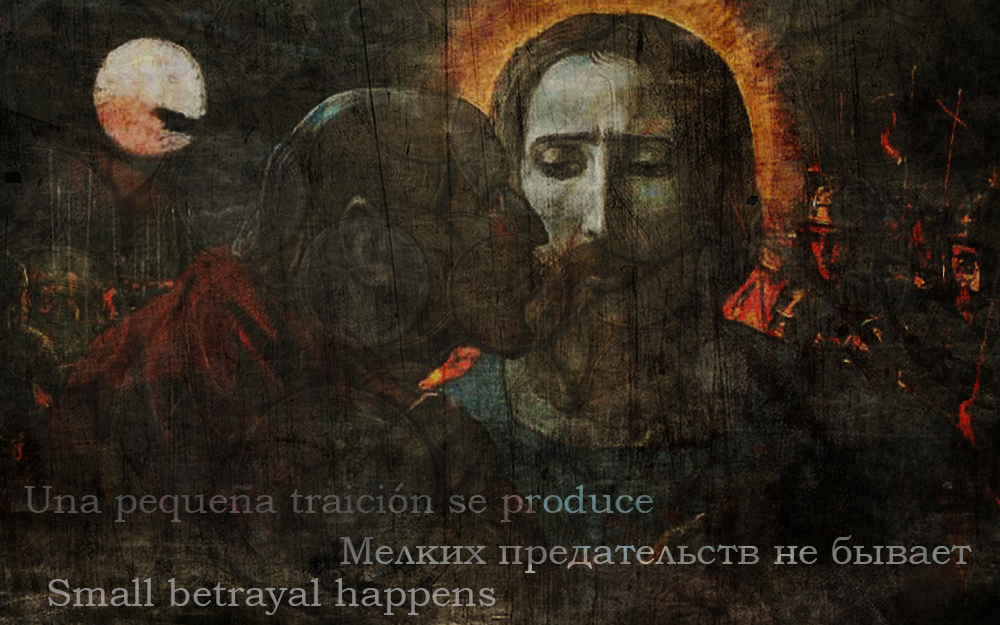
Thus Ukraine started its existence from the betrayal of its brothers. Or comrades, if you wish. Some people even called the republics of the Soviet Union cellmates - whatsoever, it doesn’t change the fact of betrayal.
Thus it started building its state from giving up on those brothers, comrades or cellmates at the most difficult moment - and for selfish reasons.
Thus it started its descent to the ninth circle of Inferno.
Irina Burya
- This is a war
- Fascism in Ukraine
- Light of Victory. Enemies fear even fallen warriors
Maybe you will be interested in reading next articles: